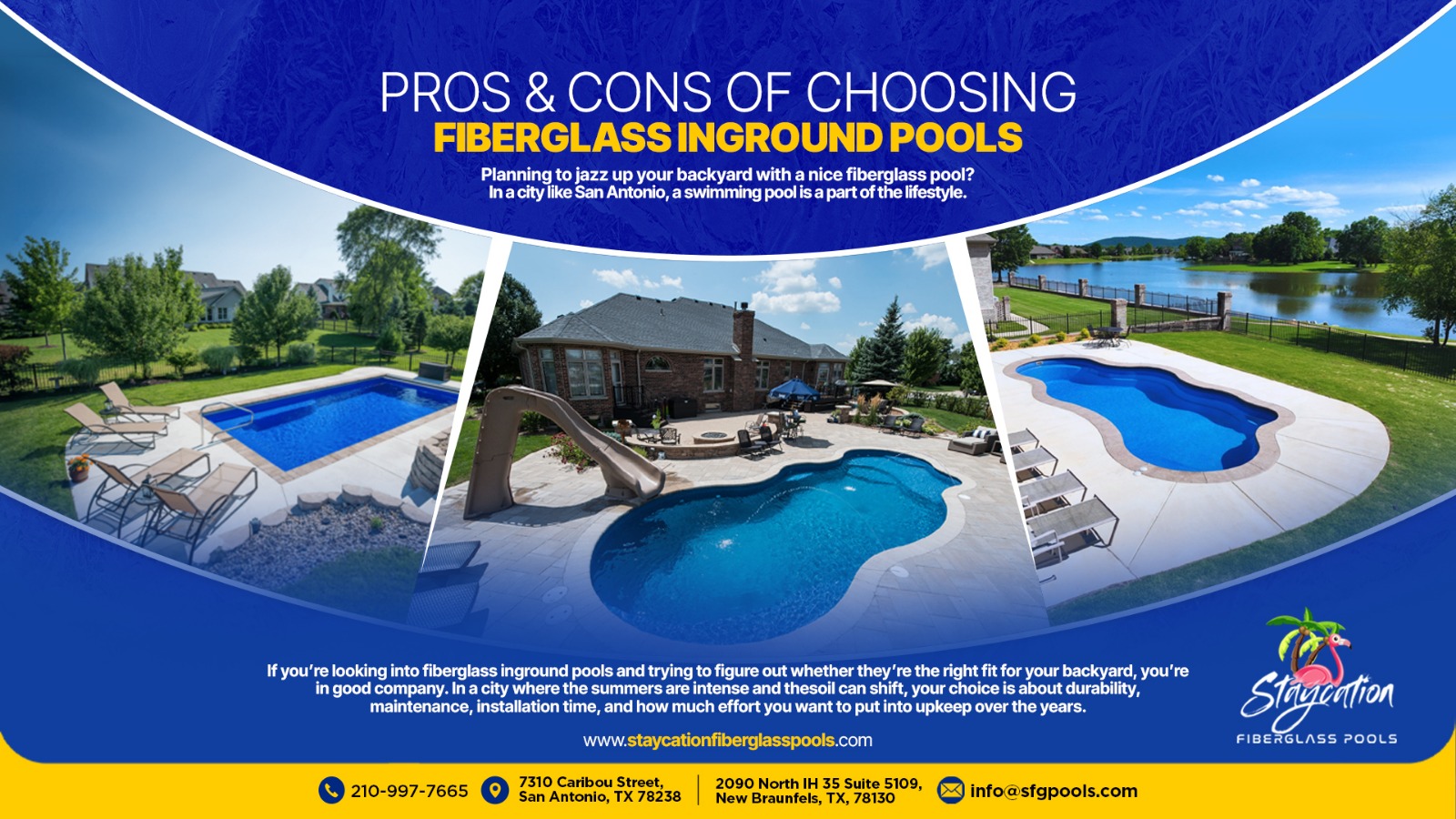
Planning to jazz up your backyard with a nice fiberglass pool? In a city like San Antonio, a swimming pool is a part of the lifestyle.
If you’re looking into fiberglass inground pools and trying to figure out whether they’re the right fit for your backyard, you’re in good company. In a city where the summers are intense and the soil can shift, your choice is about durability, maintenance, installation time, and how much effort you want to put into upkeep over the years.
However, the multiple choices in the market might make you feel overwhelmed. The good news? This guide will walk you through everything to help you decide what makes the most sense for the way you actually plan to use your pool.
If you talk to homeowners across this region, you’ll notice a pattern. More and more of them are choosing fiberglass.
Summers in this area are long, hot, and intense. On top of that, the region’s clay-heavy soil tends to expand and contract with changes in moisture. Over time, that movement can put stress on certain types of pool structures.
Fiberglass pools are built as a single, molded shell, which gives them a slight natural flexibility. Instead of resisting soil movement rigidly, they can adapt to it, making them the perfect fit for Texas conditions.
Moreover, when it comes to small backyard inground pools, fiberglass offers surprisingly stylish and space-efficient options that don’t make your yard feel crowded.
It’s easy to see why this option continues to gain popularity here. For many families, it strikes the right balance between durability, comfort, and long-term convenience, without overcomplicating the process.
When homeowners start comparing pool types, this is usually the section that makes them pause and take a closer look at fiberglass. The advantages aren’t just marketing claims; they show up in real, day-to-day ownership.
Concrete pools can stretch into months of construction. Fiberglass pools are different. They’re built off-site as a finished shell and delivered ready to install. Once excavation is complete, the installation process moves quickly and is often completed within a few weeks.
A shorter timeline disrupts your routine less, reduces the chances of weather-related delays, and gets you into your pool much sooner. In a busy, fast-growing city, that kind of efficiency makes a real difference.
This is where fiberglass truly shines.
The smooth, non-porous gelcoat surface naturally resists algae growth. That simple feature makes a noticeable difference. You need fewer chemicals and have to spend less time brushing the walls. Moreover, fiberglass has fewer stubborn buildup issues compared to porous concrete surfaces.
Over time, that translates into lower maintenance costs and less weekend labor. Most experienced pool contractors in San Antonio will tell you the same thing. Homeowners are often surprised by how manageable fiberglass pools are once they’re up and running.
Absolutely, and this is one of the most underrated benefits.
Not every home has room for a massive resort-style pool. Thankfully, modern fiberglass designs include sleek, compact models made specifically for smaller spaces. Whether it’s a plunge pool for cooling off, a cocktail pool for entertaining, or a narrow lap design for exercise, there are smart options available.
Fiberglass offers clean lines and space-conscious layouts that feel intentional rather than cramped. That flexibility makes it especially appealing in both urban and suburban neighborhoods.
This material has a smooth, almost silky surface that feels gentle on feet and skin. Unlike rougher concrete finishes, it won’t scrape toes or irritate the skin. It also tends to stay more comfortable under the Texas sun compared to darker plaster surfaces that absorb and retain heat.
Families with children often appreciate this feature the most.
Yes, and it’s a benefit that adds up quietly over time.
Fiberglass pools tend to retain heat more effectively. The smooth interior also helps water circulate more efficiently, which supports better filtration performance. When paired with modern variable-speed pumps and energy-efficient heaters, fiberglass systems can help reduce overall energy use.
No pool type is perfect. While fiberglass has many strengths, it’s important to be aware of its limitations.
Fiberglass pools come in pre-manufactured shapes and sizes. That means you can’t create fully custom freeform designs like you can with concrete.
However, manufacturers now offer a wide range of varieties like rectangular modern designs, built-in tanning ledges, integrated spas, and so on.
Fiberglass pools can cost more initially than vinyl liner pools. However, they are often competitively priced compared to concrete when factoring in long-term maintenance.
When you consider resurfacing costs for concrete pools, which may be needed every 10–15 years, fiberglass often proves cost-effective over time.
If you’ve read our blog, “Comparing Fiberglass, Vinyl, and Concrete Pools: Insights from Swimming Pool Contractors,” you already know that every pool type has its place. The key is figuring out which one aligns best with your priorities.
Vinyl pools typically come with a lower upfront cost, but they require liner replacements over time. Concrete pools offer full design flexibility, yet they demand longer installation timelines and more hands-on maintenance. They also need resurfacing down the road, which adds to long-term expenses.
Fiberglass tends to sit comfortably in the middle. Installation is faster than concrete, maintenance is generally lower than both vinyl and concrete, and the smooth surface makes everyday upkeep easier. While design customization isn’t unlimited, most homeowners find the available shapes and features more than sufficient.
For many families who value durability, comfort, and manageable maintenance, fiberglass often strikes the most practical balance.
Choosing the right pool builder is just as important as choosing the right pool. That’s why taking time to properly vet your contractor can save you from costly issues later.
Start by looking at experience, specifically with fiberglass. Not all pool companies specialize in the same materials. You’ll want to work with a team that has completed multiple installations and understands the structural and soil considerations unique to your region.
You must also discuss the installation process in detail. Ask about the type of backfill material they use and how they compact it. Proper backfilling supports the pool shell and helps prevent shifting over time.
Drainage planning is another critical topic. A well-designed drainage system protects your investment by directing groundwater away from the pool structure.
Also, discuss your pool warranty with the contractor to avoid any hassle later on. A reputable builder will walk you through coverage for the shell, surface finish, equipment, and workmanship.
Finally, ask to see recent local projects. Established San Antonio pool builders should have a portfolio of completed installations and satisfied clients who can speak about their experience. Seeing real-world examples gives you peace of mind and helps you set realistic expectations.
When weighing the Pros and Cons of Fiberglass Pools, the advantages clearly stand out for most homeowners. While design customization isn’t unlimited, the benefits make fiberglass an increasingly smart choice in Texas.
If you’re planning to install a pool and want a solution built for long-term enjoyment, working with knowledgeable professionals makes all the difference.
For homeowners exploring high-quality options, Staycation Fiberglass Pools offers thoughtfully designed models that balance style, comfort, and performance.
In addition to serving homeowners in San Antonio, we are proud to provide installations in Canyon Lake and New Braunfels, helping families across the region transform their outdoor spaces. Whether you’re in the city or in the surrounding Hill Country communities, our team brings the same level of craftsmanship and attention to detail to every project.
Contact us today to learn more about our services.
A well-installed fiberglass pool can last 25–40 years or more. The fiberglass shell itself is extremely durable and often backed by long-term structural warranties. Unlike concrete pools, fiberglass doesn’t require resurfacing every 10–15 years, which helps extend their lifespan and reduce long-term maintenance costs.
No, fiberglass pools do not crack easily. In fact, one of their biggest advantages is flexibility. The one-piece molded shell can slightly flex with soil movement, which is especially helpful in areas with expansive clay soils. Surface spider cracks in the gelcoat are rare when the pool is properly installed and maintained. Most cracking issues are typically related to poor installation rather than the material itself.
Yes, chlorine is completely safe for fiberglass pools when used properly. Standard chlorine systems work well, as long as chemical levels are kept balanced. The smooth, non-porous surface of fiberglass actually helps reduce algae growth, meaning you often need less chlorine compared to concrete pools.
It depends on your priorities. Fiberglass pools are typically faster to install, require less maintenance, and have lower long-term upkeep costs. Concrete pools offer unlimited design flexibility and fully custom shapes, but they take longer to build and require more ongoing maintenance, including resurfacing over time.
Saltwater systems work very well with fiberglass pools. The smooth gelcoat surface holds up well in salt systems and does not corrode as certain metal components can. Many homeowners prefer saltwater because it feels softer on the skin and eyes. However, regardless of whether you choose saltwater or traditional chlorine, proper water balance is essential to protect the pool surface and equipment.
Recent Articles





Popular Tags